

Published in China News on 18.05.2026
The European Chamber of Commerce Analyzes China’s New 15th Five-Year Plan: A Mix of Opportunity and Caution
Following the adoption of the 15th Five-Year Plan (15FYP) at the 2026 National People’s Congress, the European Union Chamber of Commerce in China has released its official statement on the road map that will shape the country’s economic landscape through 2030.
While the Chamber welcomes the plan’s focus on market opening and “national treatment” for foreign companies, it remains sceptical of China’s increased shift toward total self-sufficiency.
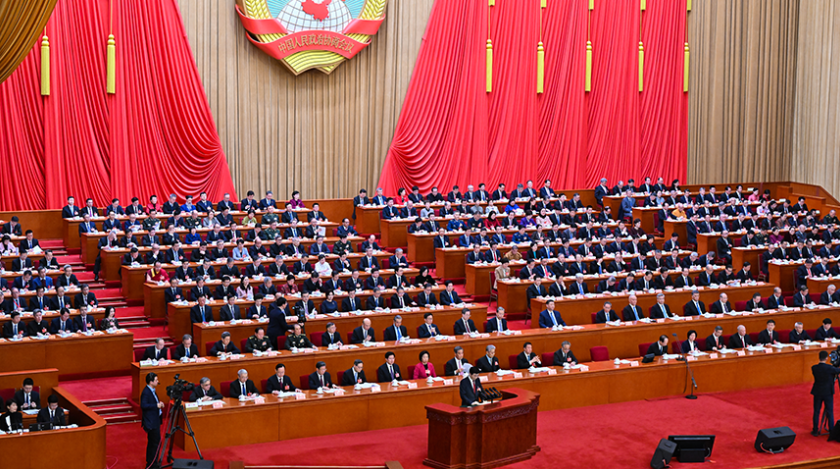
Key Points of the 15th Five-Year Plan
The 15th Five-Year Plan serves as the primary strategic guide for China’s social and economic development. This iteration highlights several key changes:
Political Continuity: A key focus is on encouraging foreign-invested enterprises (FIEs) to reinvest and further opening up the service sector.
Combating “Involution”: For the first time, the plan explicitly addresses “involution-style competition”—the hyper-competitive, low-margin environment currently weighing on several sectors—while simultaneously prioritising domestic consumption.
Technology & AI: The plan marks the transition from “Made in China 2025” to “new qualitative productive forces,” with a strong focus on AI development and cutting-edge technology.
Environmental goals: China has set a target to reduce CO₂ emissions relative to GDP by 17% over the next five years.
The Chamber’s Perspective: A Level Playing Field?
The European Chamber expressed optimism regarding the government’s commitment to “review and amend” regulations that conflict with the Foreign Investment Act. This step is seen as a necessary prerequisite for foreign companies to finally be able to compete on fair terms.
“The inclusion of measures to combat ‘involution-style’ competition suggests an understanding that the underlying structural problems of the economy must be addressed,” the Chamber stated in its declaration.
By strengthening the social safety net and improving healthcare, the 15th Five-Year Plan aims to boost consumer spending. The Chamber believes that, if successful, this could re balance trade relations between China and the EU by reducing China’s excessive reliance on exports.
Areas of Concern: The Trap of Self-Reliance
Despite the positive signs, the Chamber expressed concerns about China’s increased focus on self-reliance.
The shift toward “new qualitative productive forces” extends state support to a much broader range of industries than previous strategies. European companies, many of which have lost market share during the “Made in China 2025” era, are approaching these new sectors with great caution. There is concern that the pursuit of self-sufficiency could undermine the promised “national treatment” for foreign firms.
Outlook
The European business community remains committed to the Chinese market, particularly in sectors such as sustainable fuel production and the circular economy, where the EU’s expertise aligns with China’s 17% CO₂ reduction target.
Going forward, the European Chamber intends to provide consistent, fact-based recommendations to Chinese authorities to ensure that the 15th Five-Year Plan leads to high-quality, sustainable growth that benefits both domestic and international stakeholders.