

Published in Greater Bay Area News on
A Driving Force for the Future: How the Greater Bay Area Leads China's 15th Five-Year Plan
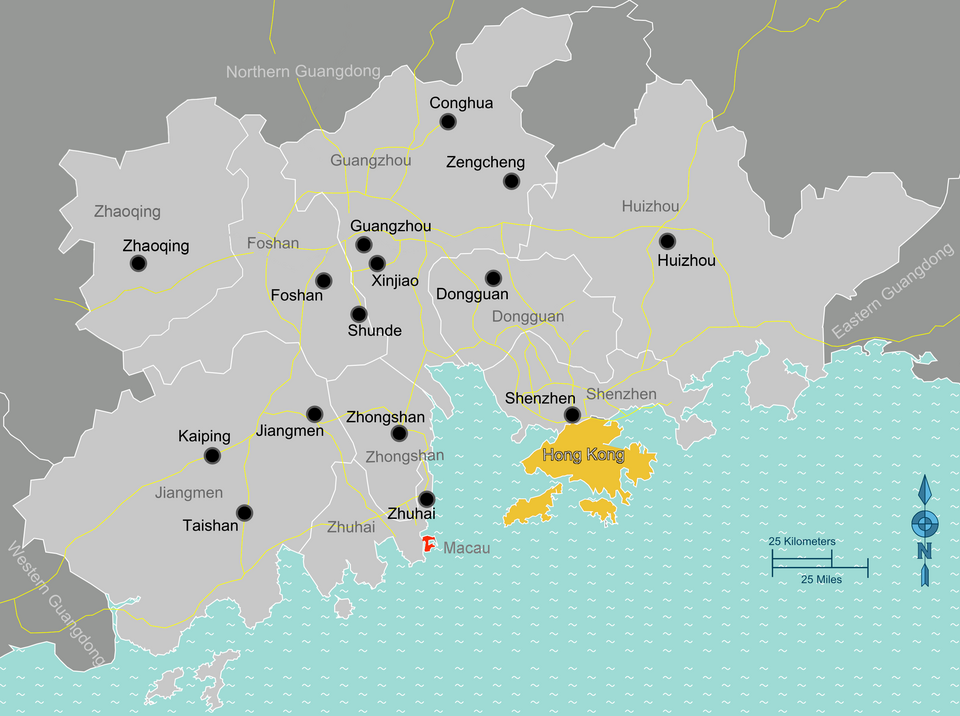
As China embarks on its 15th Five-Year Plan (2026–2030), all eyes are on the southern coast. The Greater Bay Area (GBA) has been officially established as the country’s primary engine for “high-quality development.” Its mission: to bridge the gap between traditional manufacturing and a future defined by technological self-reliance.
This cluster of eleven cities is no longer merely a regional initiative—it is a global “powerhouse” designed to compete with locations such as Silicon Valley or the Tokyo Bay Area.
The Engine of Innovation: Technological Self-Reliance
At the heart of the GBA’s strategy lies a relentless pursuit of innovation. The Shenzhen–Hong Kong–Guangzhou science and technology cluster currently ranks first in global innovation rankings for scientific publications and patents.
As part of the new 15th Five-Year Plan, the region is placing increased emphasis on the following areas:
- Deep-sea research & quantum technology: Moving beyond consumer electronics into frontier sciences.
- Low-Altitude Economy: Revolutionising urban logistics through advanced drone and VTOL (vertical takeoff and landing) technology.
- AI integration: Integrating artificial intelligence into the region’s massive production base to secure a global competitive advantage.
Hong Kong’s Strategic Reorientation: More Than Just a Financial Hub
The report highlights a significant shift in Hong Kong’s role. The city is no longer merely a participant but now acts as a “proactive contributor” in the role of a “super-connector.” The key pillars of this development include:
- Financial connectivity: Expanding the internationalization of the RMB by deepening bond markets and repatriating international RMB holdings to the mainland.
- Talent magnet: Leveraging the common law system to attract top international talent needed for industrial modernization.
- Cross-border synergies: Optimizing the flow of capital and data between the Special Administrative Region and the Pearl River Delta.
The GBA in Numbers (2024 data) The economic weight of the GBA is impressive and rivals the GDP of entire G20 nations.
| Region/City | Population |
|---|---|
| Greater Bay Area (in total) | 88 Million |
| Shenzhen | 18 Million |
| Guangzhou | 19 Million |
| Hong Kong | 8 Million |
Infrastructure: The Six-Trillion-Yuan Foundation
Connectivity is the glue that holds this vision together. During the previous 14th Five-Year Plan, infrastructure investment in the GBA totaled over 6 trillion RMB—about 9% of the region’s total GDP. The 15th Five-Year Plan aims to further refine this “one-hour living circle” so that people, goods, and capital can move across borders with minimal friction.
The “8+9” Strategy
The region is focusing its efforts on “8+9” new industries. Information technology, manufacturing, and healthcare already account for 87% of the GBA’s “new industrial sector.” By concentrating on these high-growth sectors, the GBA aims to shield the Chinese economy from global volatility while setting the standard for sustainable, technology-driven urban growth.
With an eye toward 2030, the GBA isn’t just following a plan—it’s rewriting the rules of regional economic integration.